
Suspended License Insurance Carriers — Hendersonville, TN
Free to compare
Why Standard Carriers Decline Suspended License Quotes in Hendersonville
You called your current carrier to add SR-22 filing and they told you they can't write a new policy while your Tennessee license shows suspended status in the state system. This is the structural reality Hendersonville drivers hit first: SR-22 is not a coverage type you add to an existing policy when suspension is already active. It's a compliance certificate filed alongside a new non-standard auto policy, and most preferred-tier carriers—State Farm, Allstate, USAA—exit the relationship the moment suspension appears on your MVR.
The gap between what DMV reinstatement paperwork tells you to do (obtain SR-22 certificate) and what carriers actually require (bind a full non-standard policy first, then file SR-22 as proof of that policy) creates the procedural failure point. You need a carrier that writes policies specifically for suspended-license scenarios, not a carrier that tolerates one violation on an otherwise clean record.
“Tennessee restricted licenses are court-granted, not DMV-issued—carriers need the court order before they'll bind SR-22 coverage.”

Have Your Tennessee Proof of Insurance Ready
Get My Tennessee Suspended License Insurance Quote$50
Tennessee SR-22 Filing Fee
Tennessee carriers charge a one-time $50 filing fee to submit your SR-22 certificate to the Tennessee Department of Safety and Homeland Security. This fee is separate from your premium and is non-refundable even if you cancel the policy within the first billing cycle.
Tennessee Department of Safety and Homeland Security financial responsibility filing requirements
Court-Ordered Restricted License Documentation Creates a Filing Loop
Tennessee restricted licenses are granted by courts via petition under TCA § 55-50-502, not administratively issued by the Department of Safety. If your suspension stems from DUI, the court will require proof of enrollment in or completion of an alcohol/drug treatment program before approving your restricted license petition. Most Hendersonville drivers don't realize the carrier needs a copy of that same court order before they'll bind coverage and file SR-22.
The loop works like this: you petition the court for a restricted license, the court requires proof you're enrolled in treatment, you enroll and receive documentation, you take that documentation to the court hearing, the court grants the restricted license with specific route and time restrictions, you receive the court order, and only then can the carrier verify your eligibility and bind the policy that triggers SR-22 filing. Skipping straight to an SR-22 quote without the court order in hand means the carrier can't verify your legal driving status, and most non-standard carriers won't bind coverage on speculation.
This procedural sequence is Tennessee-specific. States that issue hardship licenses administratively through DMV don't require court orders, so the carrier can quote and bind immediately after suspension. Tennessee's court-petition system adds a documentation step most national carrier websites aren't built to handle, which is why you'll hit dead ends on Progressive and Geico's online quote tools even when both carriers technically write SR-22 policies in Tennessee.

Tennessee restricted licenses require ignition interlock installation for DUI cases. The carrier needs proof of IID installation before filing SR-22, adding a third documentation checkpoint after the court order and treatment enrollment.
Related Articles

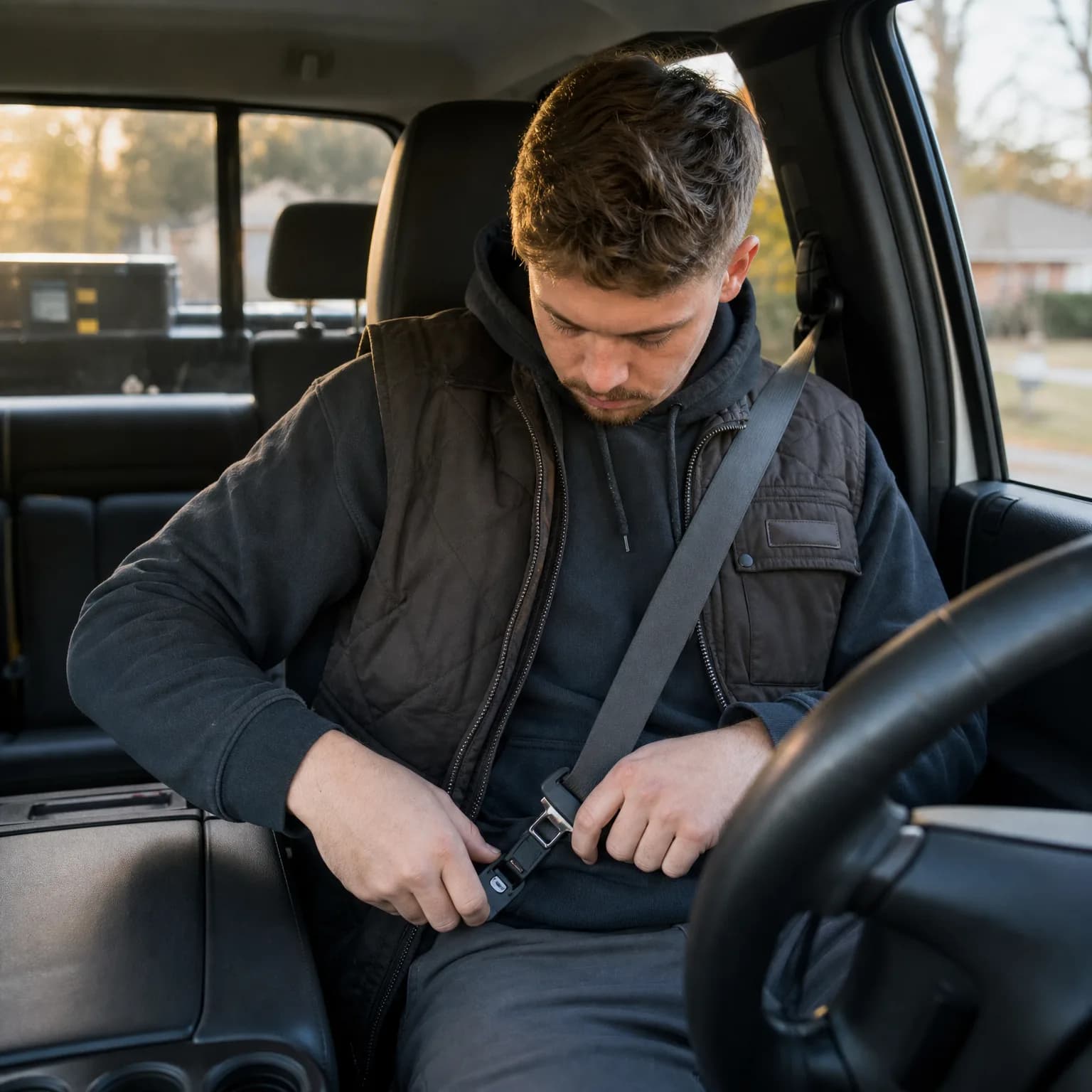





Non-Owner SR-22 Covers Reinstatement Without Vehicle Ownership
If you sold your vehicle after suspension or you're living in a household where someone else owns the car you'll eventually drive, non-owner SR-22 satisfies Tennessee's financial responsibility requirement without insuring a specific vehicle. The policy covers liability when you drive any car with the owner's permission. Tennessee accepts non-owner SR-22 for reinstatement as long as the filing remains active for the full three-year period required after DUI conviction.
Dairyland, Geico, The General, and USAA all write non-owner SR-22 policies in Tennessee. Monthly premiums for non-owner policies typically run 40-60% lower than standard auto policies because the carrier isn't covering collision or comprehensive risk on a vehicle you own. You still pay the $50 SR-22 filing fee, and the three-year filing period still applies, but the monthly cost drops substantially when you're only buying liability coverage for occasional driving.
Non-owner SR-22 does not cover you if you drive a vehicle registered in your name or a vehicle you use regularly—those scenarios require a standard auto policy with SR-22 filing. If you're planning to buy a vehicle within the next six months, start with a standard policy instead of switching mid-term, because switching from non-owner to standard auto mid-filing-period requires a new SR-22 submission and restarts your three-year clock in some cases depending on how the court order is written.
3 years
Tennessee DUI SR-22 Period
Tennessee requires SR-22 filing for three years after DUI conviction under TCA § 55-10-409, measured from the conviction date. Letting the policy lapse at any point during the three-year window triggers automatic re-suspension of your license and restarts the filing period from zero.
TCA § 55-10-409

What Happens When Your SR-22 Policy Lapses
Tennessee uses a mandatory electronic insurance verification system called TIVS. When your carrier cancels your policy for non-payment or you cancel voluntarily, the carrier reports the cancellation to TDOSHS within 24 hours. The state sends you a notice giving you approximately 30 days to provide proof of new coverage or face registration suspension and reinstatement of your original license suspension.
If your license suspension was already lifted because you completed the restricted license period and filing requirement, a mid-filing-period lapse re-suspends your license and you start the three-year SR-22 clock over from the lapse date. Most suspended drivers don't realize the filing period doesn't pause when you switch carriers—you need continuous coverage with zero gaps for the full three years, and the new carrier must file a new SR-22 certificate before the old policy's cancellation date to avoid triggering state action.
Compare Hendersonville Carriers That Write Your Specific Violation
Each non-standard carrier structures underwriting differently for DUI, points accumulation, uninsured driving, and court-ordered restricted licenses. Acceptance may approve a case Bristol West declines; GAINSCO may quote lower than Dairyland for the same driver profile. The specific violation that triggered your suspension, the number of prior violations on your Tennessee MVR, whether ignition interlock is required, and whether you need non-owner or standard auto coverage all shift which carrier offers the best combination of approval probability and monthly cost.
Get quotes from at least three carriers on the list above before binding coverage. Provide the court order, treatment enrollment proof, and ignition interlock installation certificate up front so the carrier can underwrite accurately on the first pass. Compare monthly premium, SR-22 filing fee, down payment structure, and cancellation terms—some non-standard carriers require six months paid in full, others allow monthly billing but charge higher fees for payment plans. The carrier that writes your case at a rate you can sustain for three years without lapsing is the right carrier, not the one with the lowest month-one quote.
Eight Carriers Writing Suspended License Policies in Hendersonville
Get Your Free Quote
Get My Tennessee Suspended License Insurance QuoteFrequently Asked Questions
Do I need SR-22 insurance to reinstate my suspended license in Tennessee?
Tennessee requires SR-22 filing for three years after DUI conviction, uninsured driving violations, and certain reckless driving cases. Suspensions triggered by unpaid tickets, failure to appear, or child support arrears typically do not require SR-22. Check your reinstatement notice from the Tennessee Department of Safety and Homeland Security—it will state explicitly whether SR-22 is required for your case.
Can I get SR-22 insurance without owning a car in Hendersonville?
Yes. Non-owner SR-22 policies cover liability when you drive a vehicle you don't own, and Tennessee accepts non-owner SR-22 for license reinstatement. Dairyland, Geico, The General, and USAA all write non-owner SR-22 in Tennessee. Monthly premiums run 40-60% lower than standard auto policies because the carrier isn't insuring a vehicle you own.
How long does it take to get SR-22 filed in Tennessee?
Once the carrier binds your policy, they file the SR-22 certificate electronically with the Tennessee Department of Safety and Homeland Security within 24-48 hours. The state processes the filing within 3-5 business days. You cannot begin your restricted license period or satisfy reinstatement requirements until the state confirms receipt of the SR-22 filing.
What happens if I let my SR-22 insurance lapse in Tennessee?
Tennessee's electronic verification system (TIVS) detects the lapse within 24 hours and the state sends a notice giving you approximately 30 days to provide proof of new coverage. If you don't reinstate coverage within that window, the state re-suspends your license and restarts your three-year SR-22 filing period from the lapse date, not the original conviction date.
Can I switch SR-22 insurance carriers in Tennessee without restarting the three-year period?
Yes, but only if the new carrier files SR-22 before the old policy cancels. There cannot be any gap in coverage—even one day triggers a lapse notice from the state. The new carrier must submit the SR-22 certificate to TDOSHS before your old policy's cancellation date to maintain continuous filing status and preserve your progress toward the three-year requirement.
Do all Tennessee suspended license cases require ignition interlock?
No. Ignition interlock is required for DUI-related restricted licenses under TCA § 55-10-414, and the device must remain installed for the entire restricted license period. Suspensions triggered by points accumulation, unpaid fines, or uninsured driving do not require ignition interlock unless the court orders it as a specific condition of your restricted license.
Will Geico or State Farm write SR-22 for a suspended license in Tennessee?
Geico writes SR-22 policies in Tennessee but declines most cases with active ignition interlock requirements or multiple DUI convictions. State Farm writes SR-22 for existing customers with one violation but typically non-renews or declines new business when the driver's license shows suspended status. Non-standard carriers like Acceptance, Dairyland, and The General build their underwriting for suspended-license scenarios and approve cases preferred-tier carriers decline.